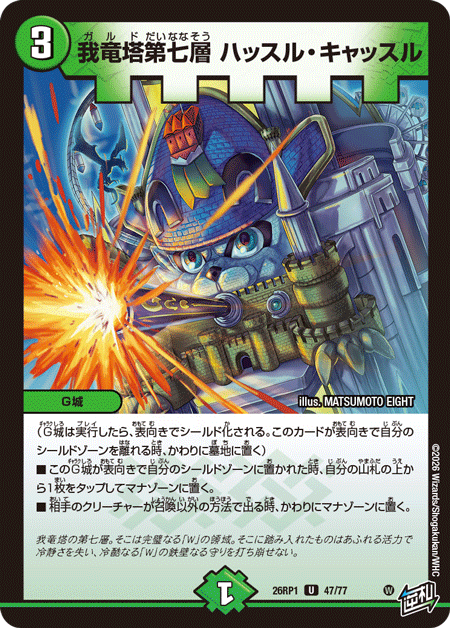
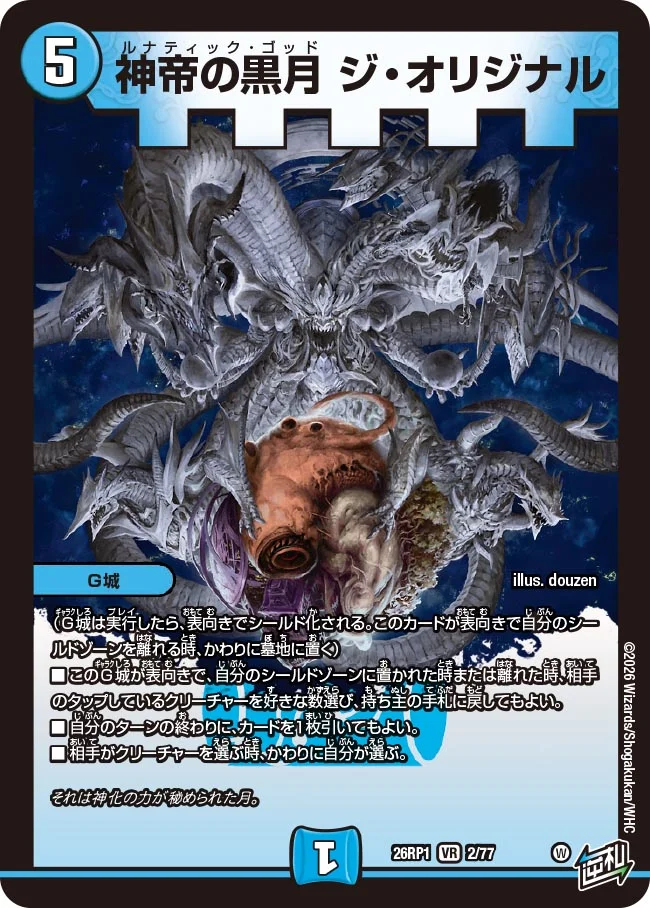
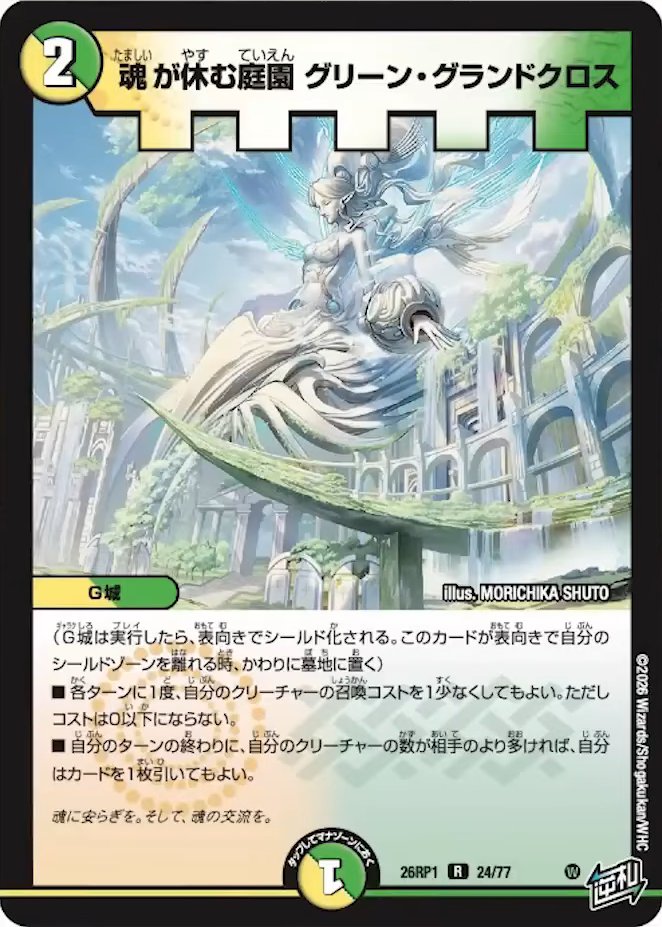
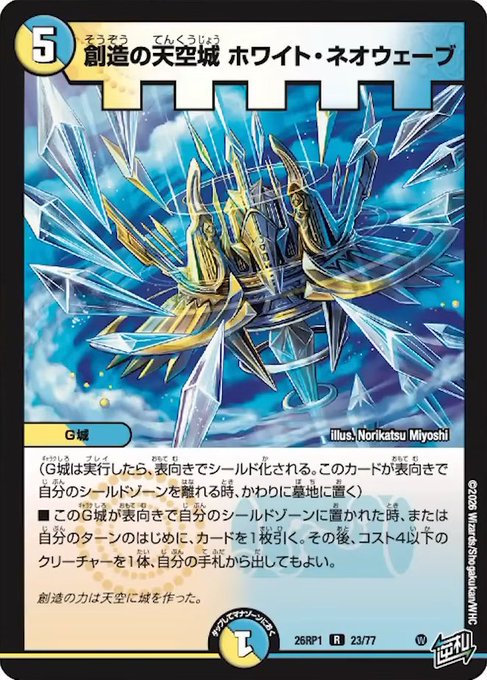
Goes to graveyard when it leaves the shield zone face-up
Usability
Somewhat heavy, suited to old-era tempo
Light, suited to modern Duel Masters
Zet Rush synergy
Indirect
Very high
The old "Castle" was a mechanic introduced in the 2008 Sengoku block. You chose one of your shields and attached a castle to it, "fortifying" it. When a fortified shield left the shield zone, that castle went to the graveyard.
Galaxy Castle is its modern version, but unlike the old castle it does not fortify. When played, the Galaxy Castle itself is placed as one new face-up shield in the shield zone. In other words: the old castle "sits on an existing shield," while Galaxy Castle "adds one shield." That is the biggest difference.
What Was the Old "Castle"?
The old castle was, simply put, a placement card attached to a shield.
For example, like the old Invincible Fortress Silver Glory, while attached to a shield it would strengthen your creatures or disrupt the opponent. Other castles that saw play in the past include Rosecastle, Snow Fort Dalmandy, Submarine Fortress Lair, and Hustle Castle.
For beginners:
The old castle is a base built on a shield. It keeps producing an effect until that shield is destroyed.
However, it had a weakness. The old castle was hard to activate without going through the formal "fortify" procedure, so it tended to be slow in tempo in the modern fast-paced game. As gameplay sped up, the old castle struggled to keep up because it was difficult to cheat into play by cost reduction.
What Is Galaxy Castle?
Galaxy Castle is a new castle that fixes the awkwardness of the old castle.
Per the official description: when played, a Galaxy Castle is placed face-up in the shield zone as a new shield, and continues to produce its effect for as long as it stays face-up. It can't attack or block like a creature, but supports the player as a shield with an ability.
For beginners:
Galaxy Castle is a placement card that adds one shield just by playing it. And while it stays face-up, it keeps producing an effect.
There are three reasons this is strong.
① The shield count increases
Your defense simply gets thicker. Easy for beginners to understand.
② It works whenever it becomes a face-up shield
Officially, Galaxy Castle can also use its ability when it is placed face-up in the shield zone by methods other than being played directly.
③ It synergizes with Zet Rush
The Exdream Series is a set where "shields leaving the zone" matters. Officially, Zet Rush activates when your shield or the opponent's shield leaves the zone, and works on both offense and defense.
Use Invincible Galaxy or Starman to shield a Galaxy Castle and trigger it outside your main phase.
5 Galaxy Castles in RP1 — Real-Game Evaluation
Galaxy Castles are not "win immediately" cards. Value comes from what you do after placing them. Ask: when do you place it, what do you develop afterward, and how does it connect to your win condition?
Best in wide-board decks. Reduces one creature's summon cost by 1 each turn; draws at end of turn if you have more creatures than your opponent. Play turn 2, deploy extra creatures from turn 3, maintain board advantage for the draw. Strong in Light/Nature beatdown. Weak in big-creature builds where creature count rarely exceeds the opponent's.
Best in mid-speed Nature builds. Places top deck card tapped to mana on entry; ongoing effect sends opponent's creatures that enter without summoning to mana instead. Sits in the shield zone — can't be removed by creature destruction. The opponent must break your shields to eliminate it. Think of it as a tempo tool, not a defensive card. Use the time it buys to ramp into your finisher.
Draws on placement and at the start of each turn; then deploys a cost-4 or less creature from hand for free. Strength depends on the quality of your cost-4 or less creatures — those with strong on-entry effects (disruption, removal, draw, blockers, special-win pieces) make this engine very powerful. Not a standalone draw spell; it deploys impactful small creatures every turn. At 5 cost, consider acceleration or protection.
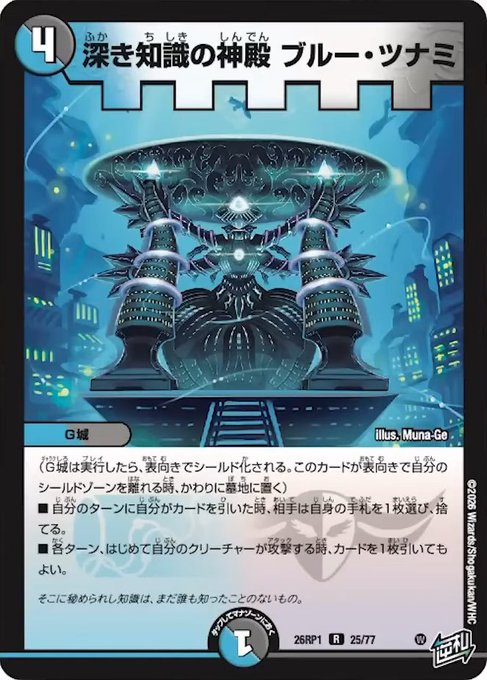
Each time you draw during your turn, opponent discards. First creature attack each turn also draws. Drawing becomes hand disruption — the more you draw in a single turn, the more cards the opponent loses. Pair with multi-draw effects to strip the opponent's hand in bursts. Best in Water/Darkness control. Note: opponent chooses what to discard, so single triggers are often wasted. Build for multiple triggers per turn.
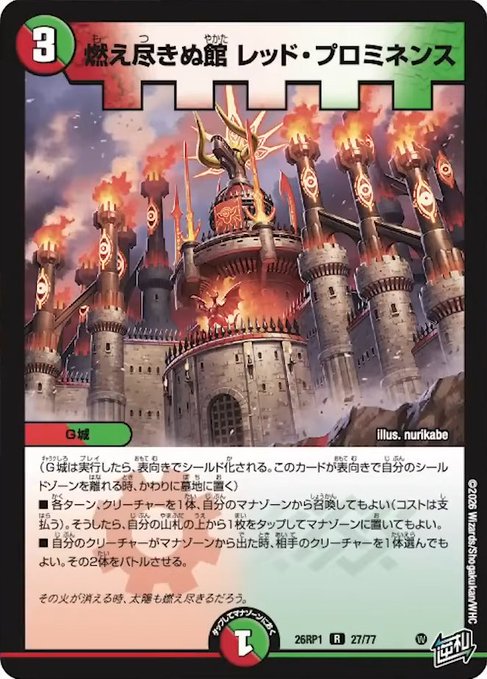
Once per turn: summon a creature from mana (pay cost), then accelerate mana. Creatures entering from mana may battle an opponent's creature. Transforms your mana zone into a second hand — cards sent to mana become future deployment options. Pair with mana acceleration and creatures with strong battle synergy or entry effects. Also works well with Shinobi builds. The key skill: decide what to send to mana early so you can deploy it when needed.
How to Choose Combo Cards
Evaluate combo cards by role, not card name. For Green Grand Cross: low-cost creatures that help outnumber the opponent. For Hustle Castle: follow-up plays that use the tempo window. For White Neo Wave: cost-4 or less creatures with strong on-entry effects. For Blue Tsunami: multi-draw effects. For Red Prominence: creatures worth storing in mana and acceleration to fuel them.
The right question: does this card let me use the Galaxy Castle's ability more times, cover its weakness, and connect to my win condition?